What To Do If You Find a Skunk
San Diego County is home to two species of skunks. The striped skunk (Mephitis mephitis) is about the size of a house cat and is easily recognized by a wide white stripe running from the head down their back, often splitting into two. They are nocturnal, highly adaptable to urban environments, and common in backyards, canyons, and parks.
Western spotted skunks (Spilogale gracilis) are less common and significantly smaller than striped skunks. They are black with broken white stripes that look like spots. Known to be shy and agile, they are rare sightings in local habitats.
Skunks are common wildlife neighbors in many communities. Although they are best known for their strong defensive spray, skunks are generally gentle animals that prefer to avoid confrontation with people. Both species are omnivores that play an important role in the ecosystem. They are most active in spring, feeding on insects, by eating insects, and other small animals that can damage gardens and crops.
Because skunks sometimes live under decks, sheds, or other sheltered areas, people occasionally encounter them in yards or neighborhoods. In most cases, skunks do not need human assistance. However, understanding normal skunk behavior can help determine when a skunk may actually need help.
Understanding Skunk Behavior
Skunks are primarily nocturnal, meaning they are most active at night. However, it is not unusual to see a skunk during the daytime, particularly during the spring when mothers must gather extra food for their young. Seeing a skunk during the day does not necessarily mean the animal is sick.
Skunks rely heavily on their sense of smell and hearing because their eyesight is poor. When threatened, they usually try to warn a potential predator before spraying. Typical warning behaviors include stomping their front feet, raising their tail, or hissing. If the threat moves away, the skunk will often leave without spraying.
Despite their stinky reputation, skunks do not spray casually. Their scent glands contain a limited supply of spray, so they generally reserve it for situations where they feel truly threatened.
Baby Skunks
Skunks usually raise their young in underground dens or sheltered spaces such as hollow logs, burrows, or areas beneath structures. Mothers may move their babies from one den to another to protect them from predators or disturbances.
Young skunks begin exploring outside the den at about six to seven weeks of age, although their mother is typically nearby watching them. A baby skunk wandering briefly on its own does not necessarily mean it has been abandoned.
If you find a baby skunk alone, observe from a distance to see whether the mother returns. Orphaned young may appear distressed, wander aimlessly, or cry repeatedly. If the mother does not return or the baby appears injured or cold, professional help should be contacted.
When a Skunk Needs Help
While most skunks should be left undisturbed, some situations require assistance.
A skunk may need help if it:
Appears injured or is bleeding
Is unable to walk normally or shows signs of paralysis
Behaves unusually, such as approaching people or acting disoriented
Is a baby found alone for an extended period with no mother nearby
Has been attacked by a pet or struck by a vehicle
In these situations, the safest course of action is to contact us or another licensed wildlife rehabilitator.
How to Care for a Skunk Until It Reaches a Wildlife Rehabilitator
If a skunk must be temporarily contained before transport to Shalom Wildlife Hospital or another wildlife rehabilitator, it is important to minimize stress and handle the animal carefully.
Use gloves and protective clothing when assisting any wild animal. Skunks are considered a rabies-vector species, meaning they can carry the disease even if they appear healthy.
Prepare a sturdy box or pet carrier lined with soft towels or cloth. Approach the skunk slowly and calmly, avoiding sudden movements or loud noises. Because skunks have poor eyesight, quick movements can startle them and trigger defensive spraying.
If it is necessary to move the skunk, gently place a towel over the animal and carefully transfer it into the container. Covering the carrier with a towel can help keep the skunk calm during transport.
Place the container in a quiet, dark area away from pets and children until the animal can be delivered to a wildlife rehabilitator.
Never attempt to feed a wild skunk or provide cow’s milk to an orphaned baby. Improper food can cause serious health problems. Instead, keep the animal warm and quiet while contacting a licensed wildlife rehabilitator for instructions.
⚠️ Safety reminder: Adult skunks can be strong and unpredictable, even when injured. If you encounter an injured adult skunk, it is safest to contact animal control or a wildlife professional rather than attempting to capture the animal yourself.
Living Alongside Skunks
Skunks are beneficial animals that help control insects and rodents while contributing to healthy ecosystems. Their digging for insects can even help aerate soil, improving soil health.
Most conflicts with skunks can be prevented by removing food sources such as uncovered trash, pet food left outdoors, or fallen birdseed. Securing crawl spaces and gaps under decks can also discourage skunks from denning near homes.
Learning to coexist with wildlife helps protect both animals and people while preserving the natural balance of local ecosystems.
✅ Key takeaway: Most skunks encountered outdoors should simply be left alone. Only injured, sick, or truly orphaned skunks require intervention, and these animals should be handled by trained wildlife professionals whenever possible.
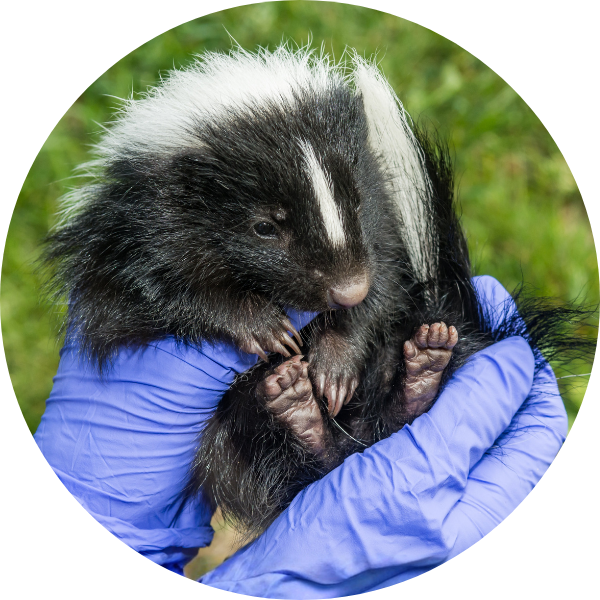
Skunks Don’t Spray Without Warning
Before spraying, skunks usually give several warning signs such as stomping their feet, raising their tail, or hissing. Backing away slowly when you see these signals often prevents the skunk from spraying.