
Injured Songbirds
Wild birds encounter many hazards in their daily lives, including predators, window strikes, vehicle collisions, and environmental dangers. When a bird becomes injured or ill, it may be unable to escape threats or obtain food. Recognizing when a bird needs help and responding appropriately can make a significant difference in its chances of survival.
The most effective assistance anyone can provide an injured wild bird is to safely contain it and transport it to a licensed wildlife rehabilitator.
Recognizing Signs of Injury
Not every bird on the ground is injured. Some birds may simply be resting or feeding. However, certain behaviors may indicate that a bird needs assistance.
Signs of injury can include:
Difficulty standing or walking
One wing hanging lower than the other
Visible wounds or bleeding
Inability to fly
Lethargy or lack of responsiveness
Allowing humans to approach closely without attempting to escape
Birds that have hit a window or been attacked by cats or dogs should always be treated as emergencies, even if the injuries are not immediately visible.
A note about window strikes
The relative impact force of a bird collision is like a human running head-first into glass at 20 mph. Birds are always harmed by these collisions, and 95% suffer concussions. Those that do not die on impact often suffer immediate or delayed effects which are deadly. Even those that fly off will likely show torticollis and other neurological signs, air sac damage (subcutaneous emphysema), and/or hematomas within 1-3 days.
If you can get close enough to a bird to pick it up, it is impaired. Don’t wait to see if it will fly off on its own. Safely capture and contain the bird and seek a wildlife rehabilitator.
Safely Capturing the Bird
If you determine the bird needs help, approach slowly and calmly. Sudden movements can cause the bird to panic and worsen its injuries.
Place your hands gently around the bird so that its wings remain folded against its body. This helps prevent further injury and keeps the bird secure. Avoid grabbing the bird by its wings, legs, or head.
If the bird is still able to move quickly, guiding it into a corner or enclosed area may make it easier to capture safely.
Temporary Containment
Once the bird has been safely caught, place it in a small cardboard box with a secure lid. Line the bottom with a soft cloth or paper towels to create a comfortable surface.
Small ventilation holes should be added to the box so the bird can breathe easily.
Keeping the bird in a dark, quiet environment helps reduce stress and allows it to remain calm until it can receive professional care.
If the bird appears cold or weak, providing gentle warmth—such as placing the box partly on a low heating pad—can help stabilize it during transport.
⚠️ Safety reminder: Do not give the bird food or water unless instructed by a wildlife professional. Birds can easily aspirate liquids or suffer complications from inappropriate foods.
Transporting the Bird
A wildlife rehabilitator should be contacted as soon as possible after the bird is secured.
During transport:
Keep the box closed and secure
Limit noise and movement
Avoid unnecessary handling
Keep pets and children away from the bird
Prompt medical attention greatly improves the likelihood that the bird can recover and eventually be released back into the wild.
Why Wildlife Rehabilitators Are Essential
If you are unsure whether intervention is needed, contact us or another licensed wildlife rehabilitator for guidance.
Caring for injured wildlife requires specialized training, proper facilities, and legal permits. Wildlife rehabilitators understand the medical needs, diets, and stress management required to help birds heal.
Their goal is always rehabilitation and release whenever possible, allowing birds to return to their natural habitat once they are healthy enough to survive on their own.
✅ Key takeaway: If a bird appears injured, weak, or unable to fly, the best way to help is to safely contain it and contact a wildlife rehabilitator immediately.
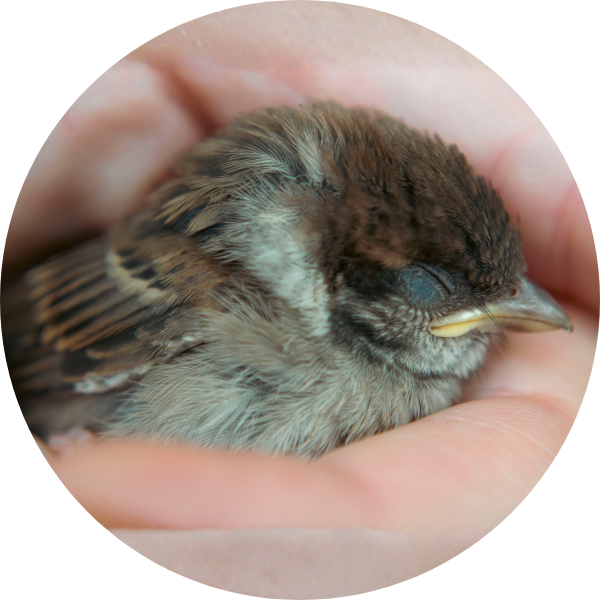
Window Strikes
Birds frequently collide with windows because reflections make glass appear like open sky or vegetation. A bird that has struck a window may be temporarily stunned but still requires monitoring and sometimes professional care.
Reduce Stress for Injured Birds
Darkness and quiet help calm injured birds. Placing them in a covered box minimizes panic and helps prevent additional injury before they reach a rehabilitator.