
Hummingbirds
Hummingbirds are among the smallest birds in North America, known for their ability to hover and fly in all directions. Their wings beat rapidly, allowing them to remain suspended while feeding on nectar from flowers.
Because of their extremely fast metabolism, hummingbirds must eat frequently throughout the day. In addition to nectar, they consume tiny insects and spiders for essential nutrients. They also play an important role as pollinators.
Behavior
Hummingbirds are active during the day and spend most of their time feeding. They may visit many flowers each day to meet their energy needs.
At night or during food shortages, they can enter a state called torpor, where their body slows dramatically. In this state, they may appear weak or even lifeless.
Common Reasons for Rescue
Window collisions
Exhaustion or starvation
Predator encounters (especially cats)
Exposure to cold or heat
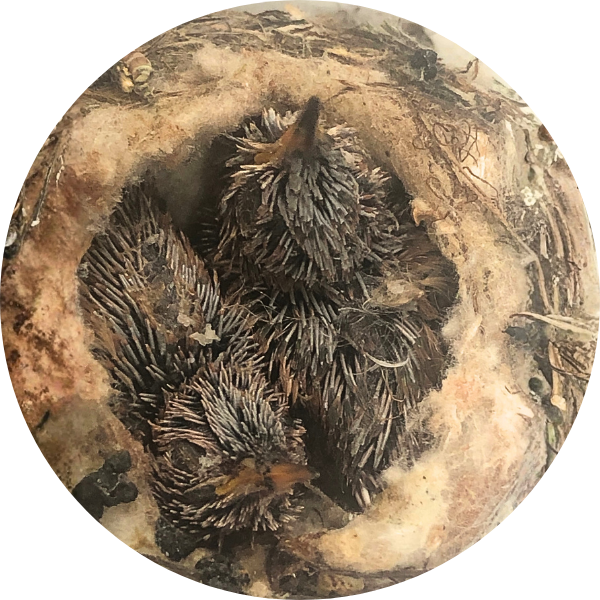
Babies falling from nests
Due to their size, even minor injuries can quickly become serious.
Signs a Hummingbird Needs Help
Sitting on the ground
Unable to fly
Easily approached or handled
Fluffed up or unresponsive
Visible injury
Baby found outside the nest
If a hummingbird does not fly away, it likely needs assistance.
What To Do With an Injured Hummingbird
Gently place the bird in a small, ventilated box
Line with soft tissue
Keep in a quiet, dark, warm place
Avoid handling
Reducing stress is critical for survival.
Feeding (Emergency Only)
Hummingbirds feed primarily on nectar, which provides the energy they need to survive. In the wild, they supplement this with small insects for protein.
If emergency feeding is necessary, only use:
1 part white sugar
4 parts water
Do not use honey, artificial sweeteners, or dyed nectar.
Offer a small drop at the tip of the beak. Allow the bird to drink on its own. Do not force feed.
⚠️ Safety note: Do not give the bird food or water unless instructed by a wildlife professional. Birds can easily aspirate liquids or suffer complications from inappropriate foods.
Stunned Hummingbirds
If a hummingbird hits a window:
Place it in a dark, quiet box
Wait 15–30 minutes
Release if it recovers
If it does not improve, seek help.
Baby Hummingbirds
If you find one or more baby hummingbirds outside of the nest:
Return to the nest if possible
Observe for the mother’s return
If unsafe, place nearby in a small container and contact a Shalom Wildlife Hospital or another wildlife rehabilitator
Do not attempt long-term feeding. Babies require specialized care.
Injury Prevention
Collisions
It is estimated that over 1 billion birds die annually in the US due to collisions with buildings (44% residential) alone. The three main causes of these collisions are transparent glass, reflective glass, and nighttime illumination. Birds don’t see transparent glass as solid and try to fly through it.
When birds fly towards reflective windows, they are flying towards the reflection of what is behind them, which is often trees, sky, and open space to explore. Even placing a few decals on a window is not enough to warn birds of the danger a window poses if a bird sees plenty of open space to fly around the decal to the ‘tree’ beyond.
NIghttime light draws birds toward buildings and also increases the reflection and transparency of glass. This means that windows that are not bird-safe are a risk to birds both day and night.
Fortunately, we can all do something to prevent bird collisions. One common and effective solution is putting patterns on glass. These patterns should have the following elements:
Spacing: should be 2 inches
Contrast: patterns should contrast with the background
Size: 1/8” or larger for lines; 1/4” or larger for dots
Outside surface: patterns must be on the outside of the glass
Other solutions include adding a screen, using decals with the 2” rule of thumb for spacing, and painting windows.
Visit Bird Collision Prevention Alliance to learn more about why birds collide with windows and how you can help protect them.
When to Contact a Rehabilitator
Injury or bleeding
Cannot fly
Weak or unresponsive
Baby without a nest
Prompt care is essential.
Our Care
At Shalom Wildlife Hospital, hummingbirds receive specialized treatment including warming, hydration, and careful feeding. Once recovered, they are released back into the wild. If you have found an injured or orphaned hummingbird, contact us or another wildlife rehabilitator to ensure it receives the care it needs.
Did you know?
Hummingbirds can enter a deep resting state called torpor to conserve energy. In this state, they may appear weak or lifeless.
Did you know?
Hummingbirds can beat their wings up to 80 times per second!