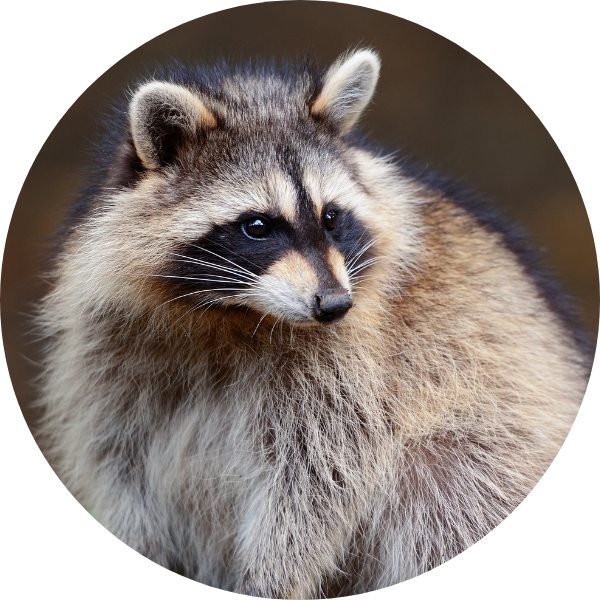
What To Do If You Find a Raccoon
Raccoons (Procyon lotor) are vital, highly adaptable omnivores that function as nature’s clean-up crew, aiding in seed dispersal, soil aeration, and pest control. They support biodiversity by balancing insect populations and acting as a food source for larger predators. As intelligent, urban-adapted creatures, they often coexist with humans, requiring secured trash, pet food, and chimneys to avoid conflict.
Should I Intervene?
In many cases, no action is needed if you encounter a raccoon, especially if the raccoon is a baby. Young raccoons are often left alone while their mother searches for food and may remain in the same spot until she returns later that night. Removing a baby too quickly can unintentionally separate it from its mother and reduce its chances of survival.
If the animal appears healthy and is not in immediate danger, observe it from a distance for up to 24 hours before deciding to intervene. Avoid touching or moving the animal during this time.
Intervention may be appropriate if you notice any of the following:
The baby raccoon has been crying continuously.
It has remained in the same location for 24 hours or longer without the mother returning.
It is very young (eyes closed) and alone.
The animal feels cold or appears weak and stretched out.
The mother has clearly died, been removed, or relocated.
The raccoon appears injured or has been attacked.
It approaches people without fear.
Flies are gathering around the animal.
If you suspect the raccoon needs help, contact us or another wildlife rehabilitator as soon as possible.
⚠️ Safety note: Raccoons are considered a rabies-vector species, meaning they are among the wildlife most likely to transmit rabies to people or pets. Avoid direct contact and never handle them with bare hands.
How to Capture and Handle a Raccoon
Attempt rescue only if it is safe and professional help is not immediately available. Injured adult raccoons can be aggressive and may bite or scratch.
Protect Yourself
Before approaching the animal:
Wear thick gloves and protective clothing such as a heavy jacket.
Never handle wildlife with bare hands.
Avoid being bitten, scratched, or licked.
Prepare a Container
Have a secure container ready before attempting capture, such as:
A sturdy cardboard box
A pet carrier
A plastic bin or garbage can with a lid
Make sure the container can be closed securely so the animal cannot escape.
Capturing the Raccoon
If capture is necessary:
Approach slowly from behind the animal.
Place a thick towel or cloth over the raccoon, covering its head.
Carefully wrap the animal in the towel.
Immediately place it in the prepared container and close the lid securely.
Transporting the Raccoon
Keep the raccoon inside the container during transport.
Place the container in the back seat, not the trunk.
Keep the vehicle quiet and calm (no loud music or excessive disturbance).
How to Care for the Raccoon Until It Reaches a Wildlife Rehabilitator
Wild animals should not be kept for extended periods by the public. Arrange transfer to a Shalom Wildlife Hospital, another wildlife rehabilitator, or animal control as soon as possible.
While waiting for transport:
Keep the raccoon inside the closed container to prevent escape.
Place the container in a quiet, low-stress environment away from pets and people.
Avoid handling the animal unnecessarily.
Do not:
Attempt to raise or keep the raccoon.
Allow direct contact with bare skin.
Keep the animal overnight if professional help is available sooner.
Professional wildlife rehabilitators have the equipment and training needed to safely treat and release raccoons back into the wild.
✅ Key takeaway: Observe first, intervene only if necessary, and prioritize both human safety and quick transfer to trained wildlife professionals.