What To Do If You Find an Opossum
Should I Intervene?
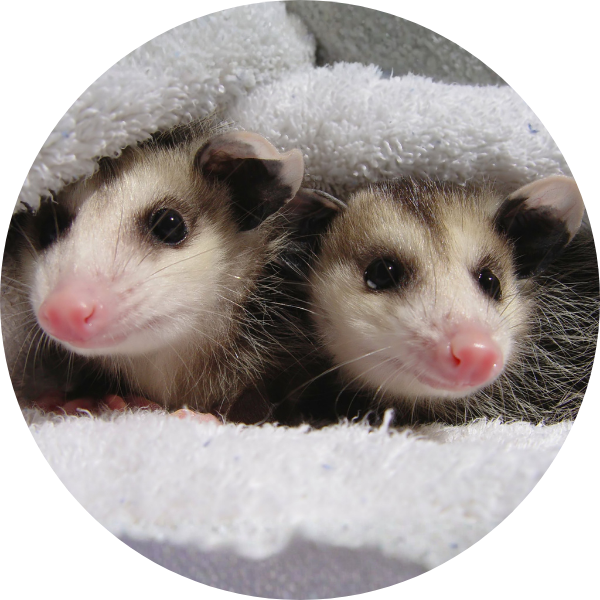
Before stepping in, determine whether the opossum actually needs assistance. Many young opossums become temporarily separated from their mother after falling off her back, and others may simply be exploring on their own. In some situations, the mother may have died—especially if you find the animal near a road.
Situations where help may be needed include:
A baby opossum alone with no sign of its mother.
A dead female opossum nearby, possibly with babies in or around her pouch.
An opossum that is clearly injured or unable to move normally.
A young animal that appears weak, cold, or lethargic.
If you discover a dead female opossum, check carefully for a pouch. Babies may still be inside or nearby and should be taken to a wildlife rehabilitator as soon as possible.
If you are unsure whether intervention is needed, contact us or another licensed wildlife rehabilitator or rescue organization for guidance. Wild animals require specialized care and should not be kept as pets or raised by the public.
⚠️ Safety reminder: Even small or injured wildlife may bite or carry parasites such as mites, so use caution when approaching or handling any opossum.
How to Capture and Handle the Opossum
If the opossum clearly needs help and professional assistance is not immediately available, you may need to safely contain it for transport.
Protect Yourself
Before approaching the animal:
Wear protective gloves.
Handle the opossum cautiously to avoid bites or scratches.
Limit direct contact as much as possible.
Capturing the Opossum
To safely contain the animal:
Gently place a sheet, towel, or pillowcase over the opossum to cover its body and head.
Carefully wrap the animal in the cloth.
Place it inside a secure box or container with air holes.
Close the container firmly to prevent escape.
Avoid examining or handling the animal more than necessary. Injured opossums are often frightened and may react defensively.
How to Care for an Opossum Until It Reaches a Wildlife Rehabilitator
Temporary care should focus only on keeping the animal stable until it can be transferred to professionals.
Provide Warmth and Shelter
Place the opossum in a ventilated container lined with soft fabric, such as a pillowcase or towel.
Keep the container in a quiet, low-stress area away from pets and people.
Ensure the animal stays warm, especially if it is a baby.
If the opossum must remain in the container for more than a couple of hours, place half of the container on a heating pad set to low so the animal can move away from the heat if needed.
Avoid Feeding or Treating the Animal
Do not:
Attempt to feed the opossum or give formula.
Provide medication.
Try to diagnose injuries.
Young opossums require specialized diets and feeding techniques based on their age and health, which wildlife professionals are trained to provide.
Transfer to a Wildlife Professional
Arrange transport to Shalom Wildlife Hospital or another wildlife rescue and rehabilitation organization as soon as possible. These facilities have the equipment and training necessary to care for opossums and return them to the wild.
✅ Key takeaway: Only intervene if the opossum clearly needs help, handle it carefully using protective gear, and focus on keeping it warm, secure, and calm until it can be transferred to trained wildlife rehabilitators.