Baby Songbirds
Each spring and summer, many people encounter young birds on the ground and assume the bird has been abandoned or needs rescue. While the instinct to help is understandable, most baby birds found outdoors are still being cared for by their parents. Understanding how birds grow and develop helps ensure that human intervention only happens when it is truly needed.
Young birds leave the nest as part of their natural development. During this time they may spend several days hopping, fluttering, and exploring while their wings strengthen. Although they may appear vulnerable, their parents are usually close by and continue feeding them until they are able to fly confidently.
Why Baby Birds Are Found on the Ground
Birds develop quickly during their early weeks of life. As they mature, they move through several stages before becoming independent.
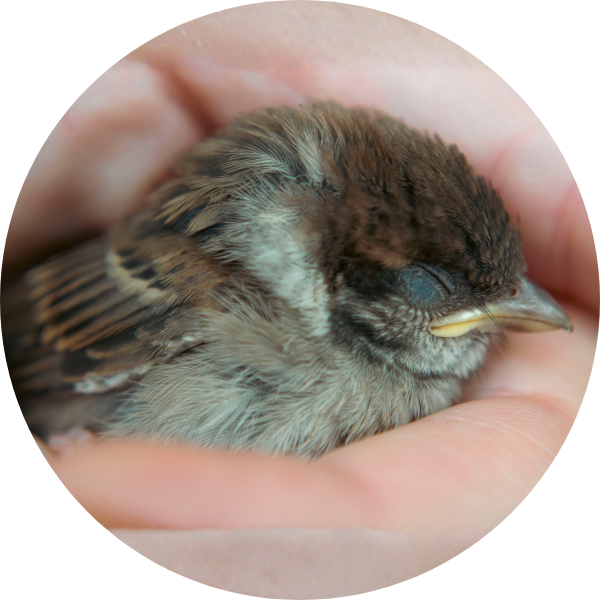
Nestlings are very young birds with little or no feathers. They cannot regulate their body temperature well and rely completely on their nest and their parents for warmth and feeding.
Fledglings are older baby birds that have developed feathers and are beginning to explore their surroundings. They often hop along the ground, perch on low branches, and flutter short distances while practicing flight.
It is common for fledglings to spend several days outside the nest while building strength and coordination. Even though they may appear vulnerable, their parents typically remain close by and return regularly to feed them.
When a Baby Bird Needs Help
Although many baby birds do not require rescue, there are situations where intervention is necessary.
A baby bird may need assistance if:
It has visible injuries such as bleeding or a broken wing
It appears weak, cold, or unresponsive
It has been attacked by a cat or dog
A nestling cannot be returned to its nest
The nest has been destroyed and no safe alternative is available
If any of these conditions are present, contact us or another licensed wildlife rehabilitator as soon as possible.
How to Care for a Baby Bird Until It Reaches a Wildlife Rehabilitator
If the bird cannot be returned to its nest and professional help is needed, temporary care may be necessary until it can be transported to a wildlife rehabilitator.
Place the bird in a small cardboard box with a secure lid. Line the bottom with soft cloths or paper towels to create a comfortable resting area. The box should have several small ventilation holes to allow airflow.
Keeping the container in a quiet, dark, and warm location will help reduce stress. Avoid excessive handling and keep pets and children away from the bird.
For nestlings, warmth is especially important. Placing the box partially on a low heating pad or near a gentle heat source can help maintain a stable temperature until professional care is available.
⚠️ Safety reminder: Do not give food or water to a baby bird unless specifically instructed by a wildlife rehabilitator. Young birds require specialized diets and feeding techniques, and improper feeding can cause serious harm.
Returning the Bird to Its Parents When Possible
Whenever possible, reuniting the bird with its parents offers the greatest chance for survival. If you find a nestling on the ground and the nest is reachable, gently return the bird to the nest.
Contrary to popular belief, birds will not reject their young because they have been touched by humans.
If the nest has fallen or been destroyed, a simple replacement nest made from a small container can sometimes be placed in a nearby tree or shrub. Parent birds often resume feeding their chick once it is safely positioned.
Why Professional Care Matters
If you are unsure whether intervention is needed, contact us or another licensed wildlife rehabilitator or rescue organization for guidance. Wild animals require specialized care and should not be kept as pets or raised by the public.
Wild birds have very specific dietary and developmental needs that vary by species and age. Wildlife rehabilitators are trained to provide proper nutrition, medical care, and housing while minimizing human contact.
Their goal is always rehabilitation and release so the bird can eventually return to the wild.
✅ Key takeaway: Most young birds found on the ground do not need to be rescued. Many are fledglings that are learning to fly while their parents continue caring for them nearby. In many cases, the best action is simply to leave the bird where it is.
Myth vs. Fact
Myth: If you touch a baby bird, its parents will abandon it.
Fact: Birds have a limited sense of smell and will continue caring for their young even if they have been handled by humans.
Did You Know?
Fledgling birds may spend several days on the ground while learning to fly. During this time, their parents continue to feed them and teach them survival skills.